 Skip to main content
App Development
Services
/
App Development
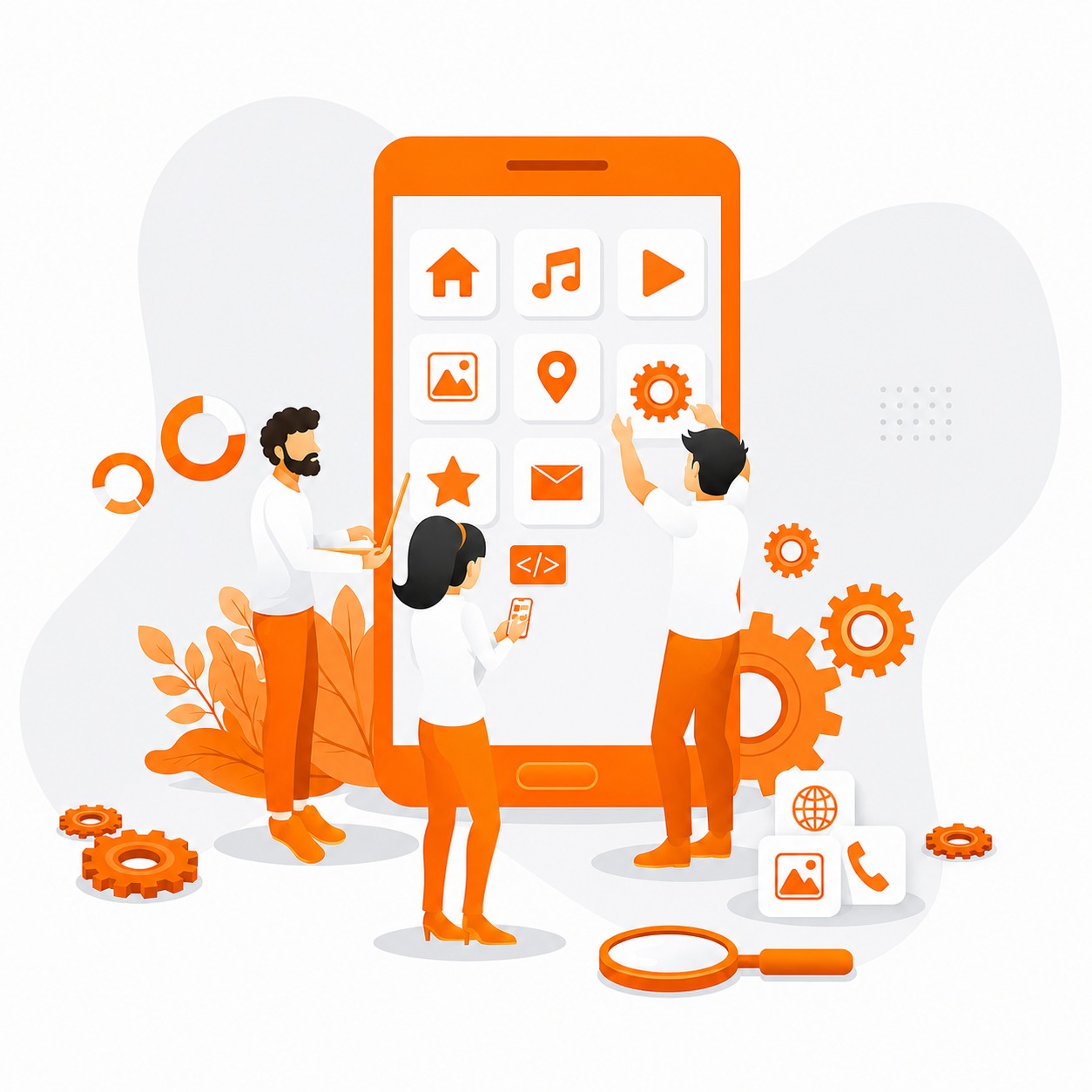
Build Mobile Apps That Solve Real Business Problems
A successful mobile app does more than look good on a phone. It needs to be easy to use, technically reliable, secure, fast, connected to the right systems, and designed around a clear business objective.
Optivise Solutions provides mobile app development services for startups, small businesses, growing companies, nonprofits, educational organizations, and teams that need a mobile experience built around their users and business requirements.
We design and develop mobile applications for iOS, Android, and cross platform environments, combining product planning, UI/UX design, frontend and backend development, API integration, testing, deployment, analytics, and ongoing improvement.
Whether you are launching an MVP, creating a customer facing application, building an internal business tool, or adding mobile functionality to an existing digital ecosystem, we focus on building an app that works as part of the larger business rather than as an isolated piece of software.
Have an app idea, business process, or customer experience you want to bring to mobile?
What Is Mobile App Development?
Mobile app development is the process of planning, designing, building, testing, deploying, and maintaining software for mobile devices such as smartphones and tablets.
A complete mobile application usually involves more than the screens users see. A typical architecture may include:
Mobile UI → API → Backend → Database → Response → Mobile UI
The mobile frontend provides the user experience. The backend handles business logic and data processing. APIs connect the application to backend services, databases, and other business systems.
Depending on the application, the architecture may also include cloud services, authentication, payments, notifications, analytics, AI capabilities, and third party integrations.
That is why successful app development starts with understanding the product and the people who will use it.
What We Build
iOS App Development
We can develop iOS applications for businesses and product teams that need a dedicated Apple experience.
Depending on project requirements, an iOS application may support iPhone and iPad experiences, user accounts, custom workflows, secure authentication, notifications, payments, API integrations, cloud connected features, and analytics.
When a project benefits from platform specific functionality, native iOS development can provide greater control over the Apple experience.
Android App Development
We develop Android applications for businesses and organizations that need mobile experiences across supported Android devices.
Depending on the application, this can include customer facing apps, internal business apps, service applications, booking systems, commerce experiences, account management, notifications, backend integrations, and data synchronization.
Android development also requires attention to device diversity, screen sizes, performance, permissions, and compatibility.
Cross Platform App Development
Cross platform development can be a practical option when you want to support multiple mobile platforms through a shared development approach.
It can help reduce duplicated development work while maintaining a consistent product experience across supported platforms.
The right approach depends on performance requirements, device specific functionality, user experience, budget, development timeline, maintenance requirements, and future platform expansion.
Native vs. Cross Platform vs. Hybrid vs. PWA
Choosing a development approach early can affect the application’s performance, user experience, maintenance, and long term scalability.
Native Apps
Built specifically for one platform, such as iOS or Android.
Cross Platform Apps
Built using a shared development approach for multiple platforms.
Hybrid Apps
Combine web technologies with a native application wrapper.
Progressive Web Apps
Web applications designed to provide an app like experience through a browser.
The right choice should come from your product requirements rather than technology preference alone.
Mobile UI/UX Design That Makes the App Easy to Use
A mobile app needs more than functional code. Users need to understand where to go, what to do, and what happens next.
Our development process considers user research, user journeys, information architecture, wireframes, prototypes, navigation, mobile UI, touch interaction, accessibility, usability, and responsive layouts.
For projects that require a deeper dedicated design engagement, our UI/UX Designing service can support research, wireframing, prototyping, interface design, and user journey planning.
Good mobile UX should make important tasks clear and efficient without overwhelming the user.
Frontend & Backend Development
A mobile application is often only one layer of a larger software system.
Mobile Frontend
The frontend is the part users interact with, including app screens, navigation, forms, interactions, visual components, authentication experiences, and notifications.
Backend
The backend can handle business logic, user accounts, authentication, databases, data processing, APIs, permissions, storage, and integrations.
APIs Connect the System
APIs allow the mobile application to communicate with backend services and other business systems.
For specialized applications that require a broader custom platform behind the mobile experience, Optivise also provides Custom Software Solutions for tailored business applications, portals, workflow systems, dashboards, and other software requirements.
API Development & Business System Integration
Your app may need to communicate with the rest of your technology environment.
Depending on the project, integrations can connect the application with CRM systems, payment platforms, databases, calendars, marketing systems, communication tools, cloud services, and other business applications.
A connected architecture might look like:
Mobile App → API → CRM → Automation → Customer Communication → Reporting
For businesses using GoHighLevel as part of that ecosystem, our GoHighLevel Setup & Automation service can support the CRM and workflow side of the implementation.
The goal is to make your mobile application part of your business system rather than another isolated tool.
Cloud Connected Mobile Applications
Modern mobile applications often rely on cloud infrastructure for backend services, databases, storage, authentication, notifications, and scalability.
Depending on the project, a cloud connected architecture may support:
Cloud databases
Cloud storage
Authentication services
APIs
Push notifications
Real time data
Background processing
Scalable backend infrastructure
The architecture should follow the application’s requirements rather than forcing every project into the same cloud model.
Mobile App Security
Security should be considered from the beginning of the development lifecycle.
Depending on the application, this may include:
Authentication
Authorization
Role based access
Multi factor authentication
Secure APIs
Encryption
Secure data storage
Session security
Access controls
Security testing
Data privacy considerations
For applications handling sensitive information, security should influence architecture, data flows, integrations, testing, and deployment.
Mobile App Testing & Quality Assurance
An application should perform correctly across the environments that matter to its users.
Our quality process can include functional testing, integration testing, device compatibility testing, performance testing, security testing, usability testing, and user acceptance testing.
The goal is to establish a reliable path from:
Development → Testing → Validation → Release
Testing should cover both expected workflows and the situations where users do something unexpected.
AI Powered Mobile Applications
AI can turn a standard mobile application into a more intelligent product when it solves a real business or user problem.
Potential use cases include:
AI assistants
Intelligent search
Personalized recommendations
AI customer support
Predictive features
Document processing
Voice based interactions
Smart notifications
For applications where AI needs to connect with broader business workflows rather than operate only inside the app, our AI Business Workflow service can support a wider intelligent automation strategy.
Mobile App Automation
A mobile application can become even more useful when user actions trigger business processes.
For example:
User submits request → API receives data → CRM updates → Workflow starts → Team notified → Status changes → User receives notification
This can connect the app with CRM automation, appointment scheduling, lead management, customer communication, reporting, and internal workflows.
For broader operational automation, our Business Process Automation service can help automate connected business processes beyond the mobile application itself.
Customer Facing Mobile Apps
Customer applications can create a more direct relationship between an organization and its users.
Potential use cases include:
Customer accounts
Bookings
Payments
E commerce
Memberships
Service access
Notifications
Customer support
Loyalty
Personalized content
When the application needs AI driven customer interaction, it can also connect with AI Powered Customer Communication to support customer conversations and communication workflows.
Business Mobile Apps
A mobile application can also improve internal operations.
Examples include:
Employee apps
Field service apps
Internal workflow apps
Mobile CRM
Inventory applications
Reporting tools
Task management apps
Scheduling systems
Operational applications
A business app should simplify work rather than simply move a complex desktop process onto a smaller screen.
MVP App Development
Not every product needs a large application on its first release.
An MVP (minimum viable product) focuses on the essential features needed to test a product idea with real users.
An MVP can help a startup or growing business:
Validate demand
Test the user journey
Collect feedback
Prioritize features
Identify technical challenges
Learn what users actually need
For products that grow into larger software or SaaS platforms, our Software & SaaS Development service can support the broader product development journey.
App Analytics & Performance Monitoring
Launching an application does not tell you whether users find it useful.
Analytics can help teams understand feature usage, engagement, retention, conversion, user journeys, app performance, crash activity, and areas where users drop off.
Those insights can guide product decisions and help determine which features need improvement.
App Store & Google Play Deployment
Development is only one part of launching a mobile application.
A production release may involve:
Release configuration
Build preparation
Beta testing
App store requirements
Version management
Store submission
Production verification
Post launch monitoring
Launch planning should begin during development so the product is ready for release when the build is complete.
Mobile App Maintenance & Continuous Improvement
An application requires ongoing attention after launch.
Operating systems change, devices evolve, integrations are updated, security requirements develop, and users request new capabilities.
Ongoing support may include:
Bug fixes
Security updates
OS compatibility updates
Performance improvements
Feature enhancements
API updates
Integration maintenance
Crash monitoring
Analytics review
Version releases
The app should continue to evolve with the business.
Our Mobile App Development Process
1. Discovery & Product Planning
We understand the business problem, target users, goals, existing technology, and expected outcomes.
2. Requirements Gathering
We define features, user roles, workflows, data requirements, integrations, security considerations, and priorities.
3. UI/UX Design
We map user journeys, create wireframes and prototypes, and establish the interface structure.
For dedicated design support, our UI/UX Designing service can support the experience design stage.
4. Technical Architecture
We plan the frontend, backend, database, APIs, cloud services, integrations, authentication, and supporting infrastructure.
5. Development
We build the application and supporting systems according to the approved requirements and milestones.
6. Testing & Quality Assurance
We test functionality, integrations, device compatibility, performance, security, usability, and user acceptance.
7. Deployment
We prepare the application for its production environment and support the release process.
8. Monitoring & Improvement
We use performance data, analytics, user feedback, and business requirements to guide ongoing improvements.
Why Choose Optivise for Mobile App Development?
Business First Development
We start with the business problem and user requirements instead of selecting technology first.
Complete Product Thinking
We consider strategy, UX, architecture, development, integrations, testing, deployment, and ongoing improvement as parts of one lifecycle.
Connected Technology
We design applications that can work with the systems your organization already relies on.
Practical AI
We introduce AI where it provides a real user or business benefit.
Scalable Foundations
We consider future features, integrations, users, data, and platform expansion from the beginning.
Ongoing Improvement
We recognize that mobile products evolve after launch through analytics, user feedback, technology changes, and new requirements.
Frequently Asked Questions
What is a mobile app development service?
A mobile app development service covers the planning, design, development, testing, deployment, and maintenance of applications for smartphones and tablets.
What types of mobile apps can you develop?
We can develop iOS, Android, cross platform, business, customer facing, internal, and MVP applications according to the project requirements.
Should I choose native or cross platform app development?
It depends on your application. Native development can make sense when platform specific functionality or specialized performance matters. Cross platform development can be effective when you need multiple platforms and the product fits a shared technology approach.
Can a mobile app connect to our existing CRM?
Yes, when the CRM provides appropriate integration capabilities. A mobile application can communicate with CRM systems through APIs, supported integrations, or other suitable methods.
Can you build the backend for a mobile application?
Yes. Depending on the project, the backend can include business logic, databases, APIs, authentication, data processing, cloud services, and integrations.
Can you add AI to a mobile application?
Yes. AI can support assistants, search, recommendations, customer support, predictive features, document processing, voice experiences, and other use cases where it creates practical value.
Can mobile apps work offline?
Yes, depending on the architecture and requirements. Offline functionality may involve local storage, caching, synchronization, background processing, and conflict resolution.
How do you test a mobile application?
Testing can cover functionality, integrations, usability, device compatibility, performance, security, regression, and user acceptance.
Can you help launch an app on the App Store and Google Play?
Yes. Deployment planning can include release preparation, store requirements, submission support, production verification, and post launch monitoring.
What happens after the app launches?
Post launch support can include bug fixes, security updates, OS compatibility, performance improvements, feature enhancements, integration maintenance, analytics, and continuous optimization.
Build a Mobile App That Works for Your Business
A mobile app should solve a real problem, make an important experience easier, and create measurable value for the people who use it.
Optivise Solutions provides mobile app development services that bring together product planning, UI/UX, frontend and backend development, APIs, cloud services, integrations, security, testing, deployment, analytics, AI, automation, and ongoing improvement.
Whether you are validating an idea, improving internal operations, creating a customer facing experience, or building a larger digital product, we can help turn your requirements into a practical mobile solution.
Plan with purpose. Build for users. Launch with confidence. Improve continuously.
Ready to Build Your Mobile App?
Tell us what you want your app to accomplish, who will use it, and what problem you want it to solve.
Agar aap chahen to main isi tarah next content bhi directly copy ready format mein kar dunga.